WARNING: Do NOT transport fresh home-grown fruit from a quarantine area into or through a pest-free area.
Preparing apricots for canning can be quite the process, and individuals definitely have preferences. I prefer to rinse and pit the apricots before removing the skins, but it isn’t strictly necessary. I just don’t want to go to the trouble of skinning apricots that I won’t be able to use, and opening and pitting them allows me to make sure they don’t have mold, bugs, or eggs inside before going further with them.
I start by filling a pan with water, and setting it to heat to a boil.

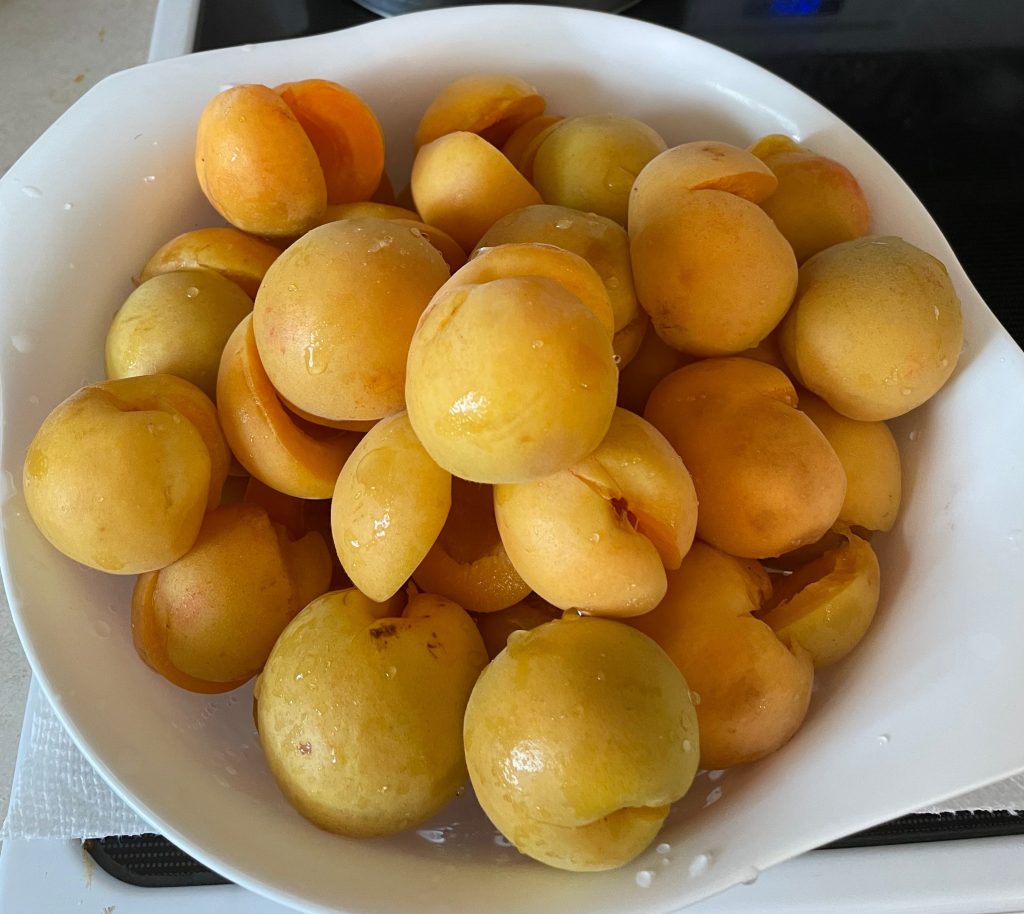
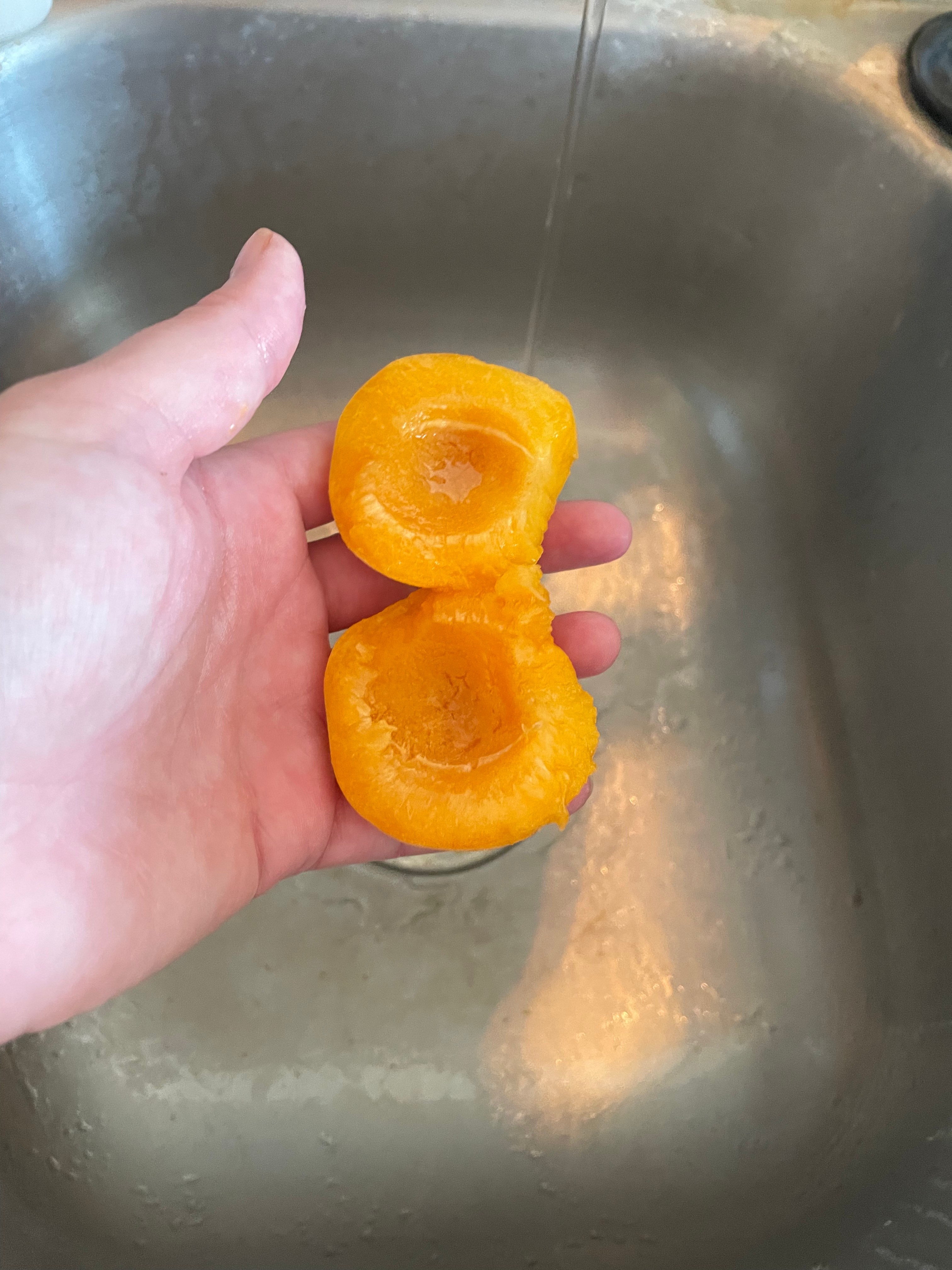
Then, I take a paring knife, colander, apricots, and the garbage can to the sink. I take each apricot, rinse it thoroughly to get off any bird droppings, check for (and remove) external blemishes, then split the apricots in half, removing the pits, and place the apricot into the colander.

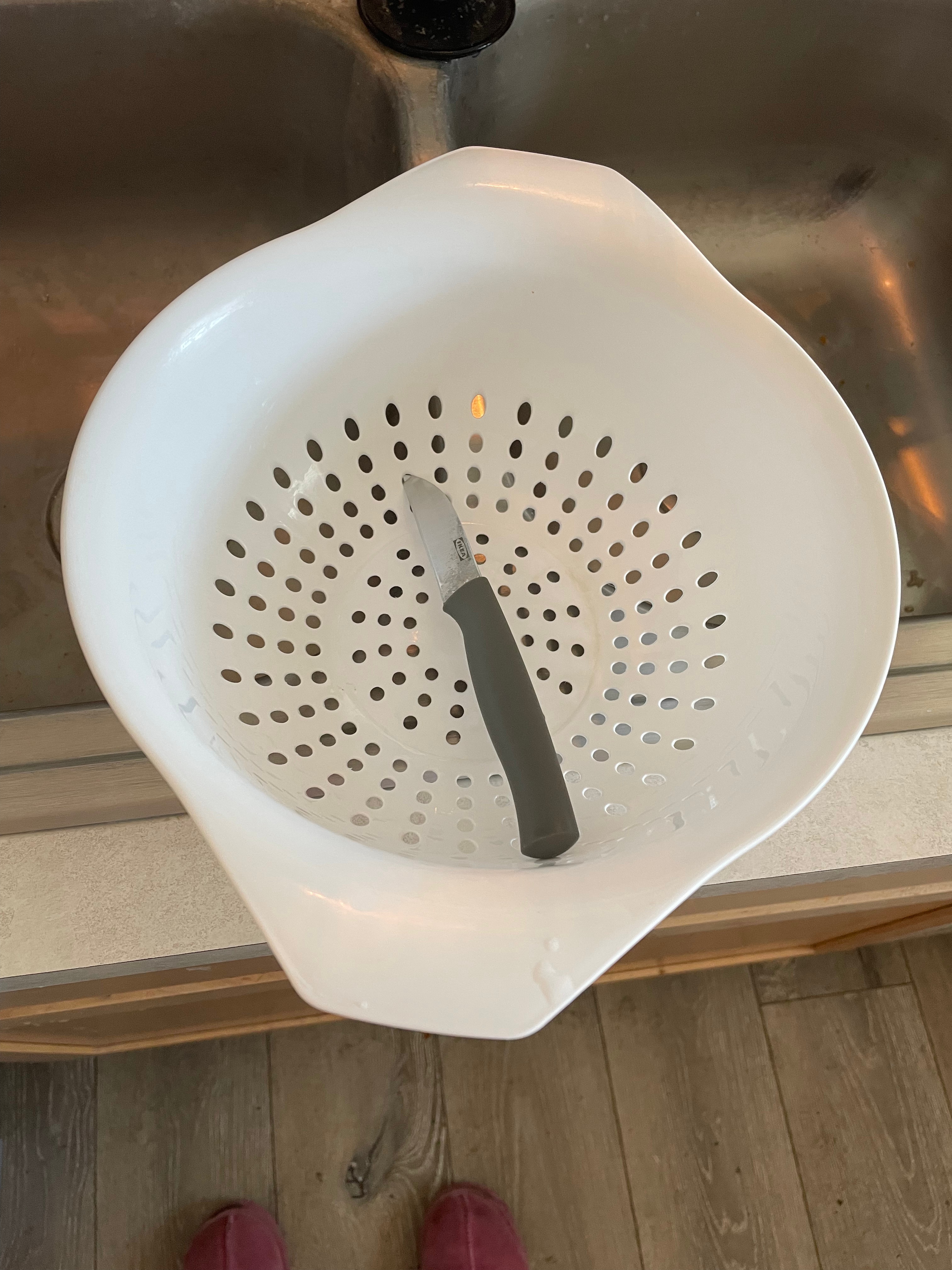


When I have filled the colander with apricots, I check the water on the stove to see how close to boiling it is, and I get out a fine, metal strainer and put together my food processer (container, blade, lid). I also get a large bowl, filling it with ice and cold water.
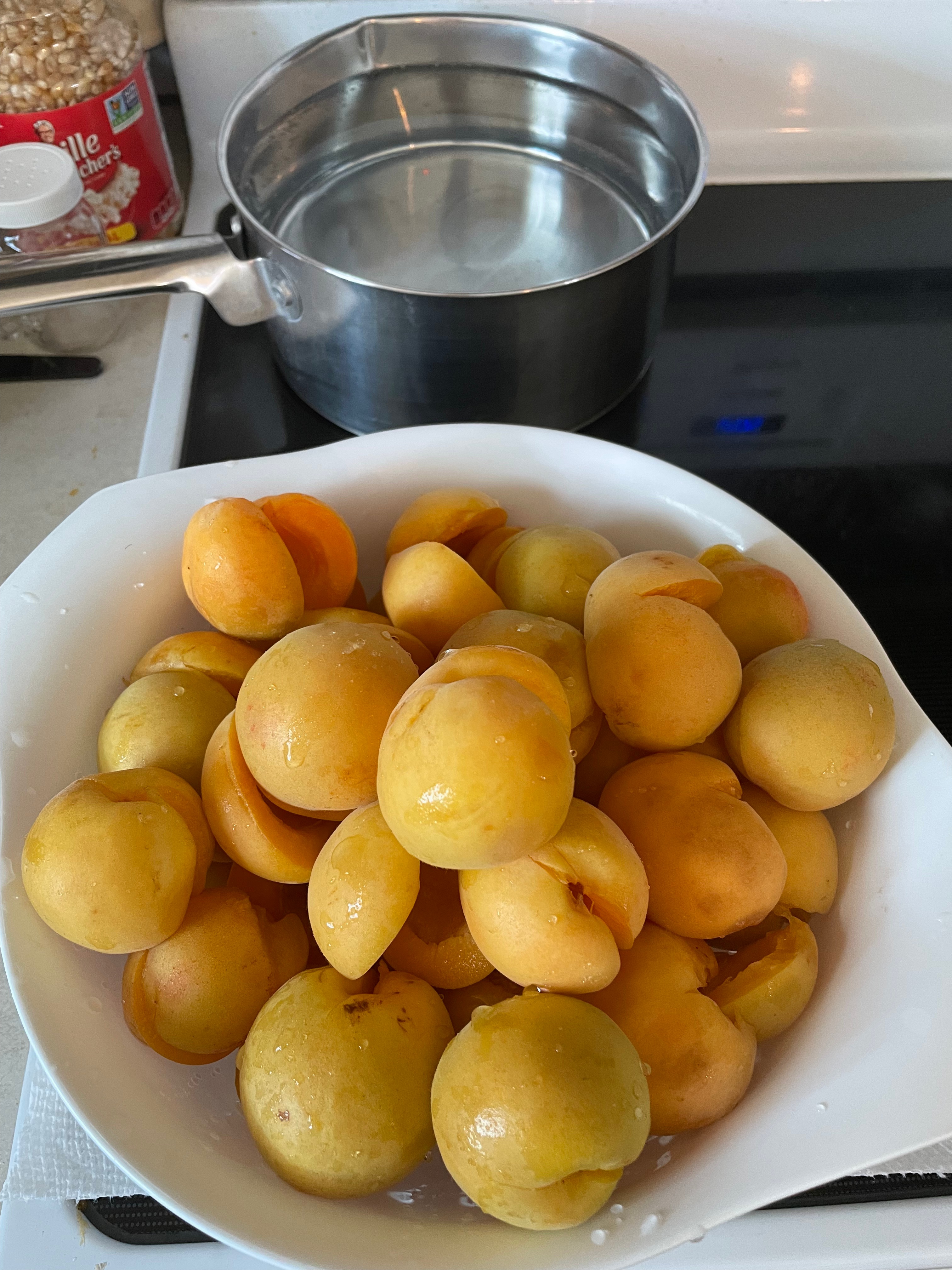
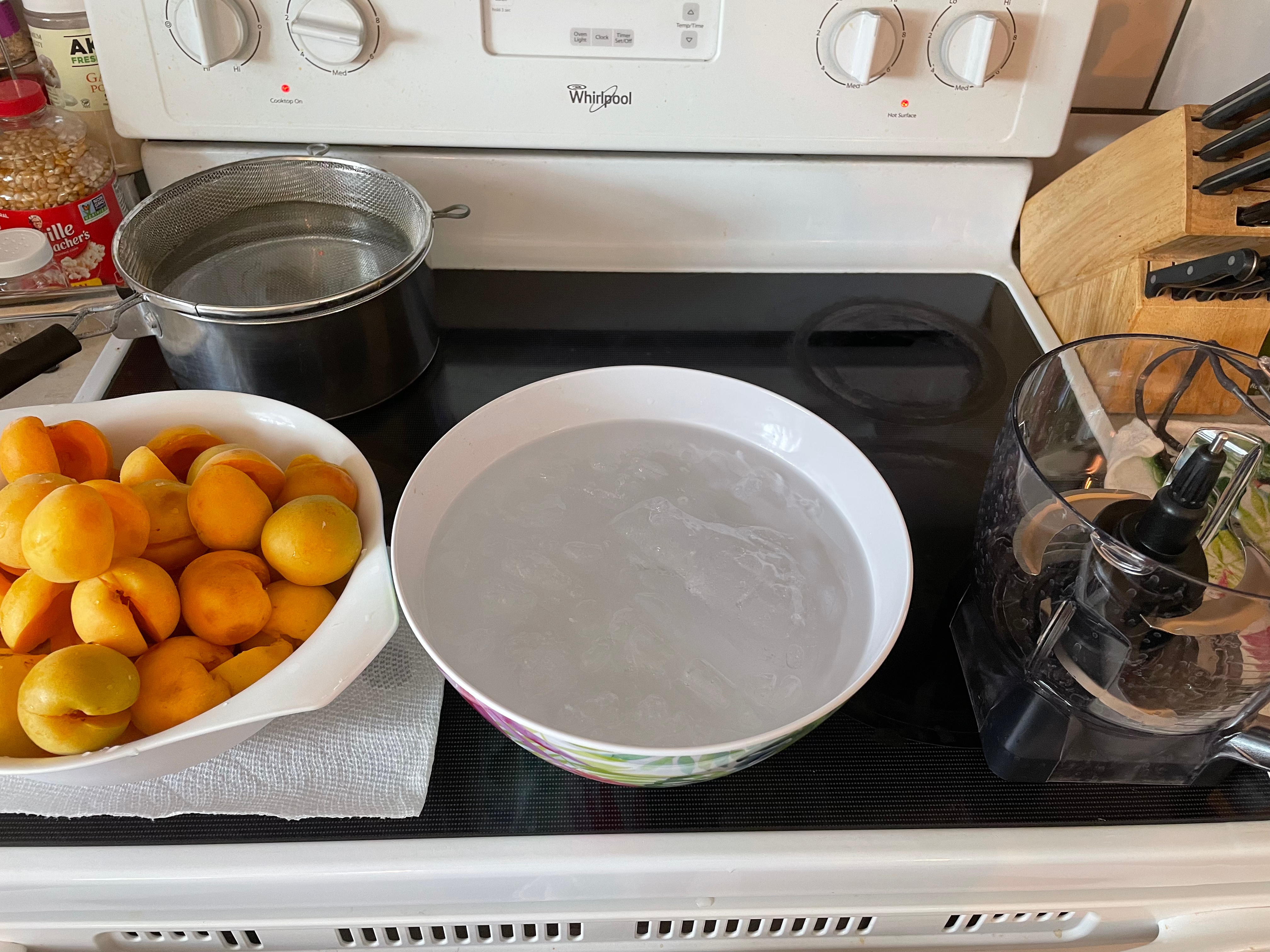
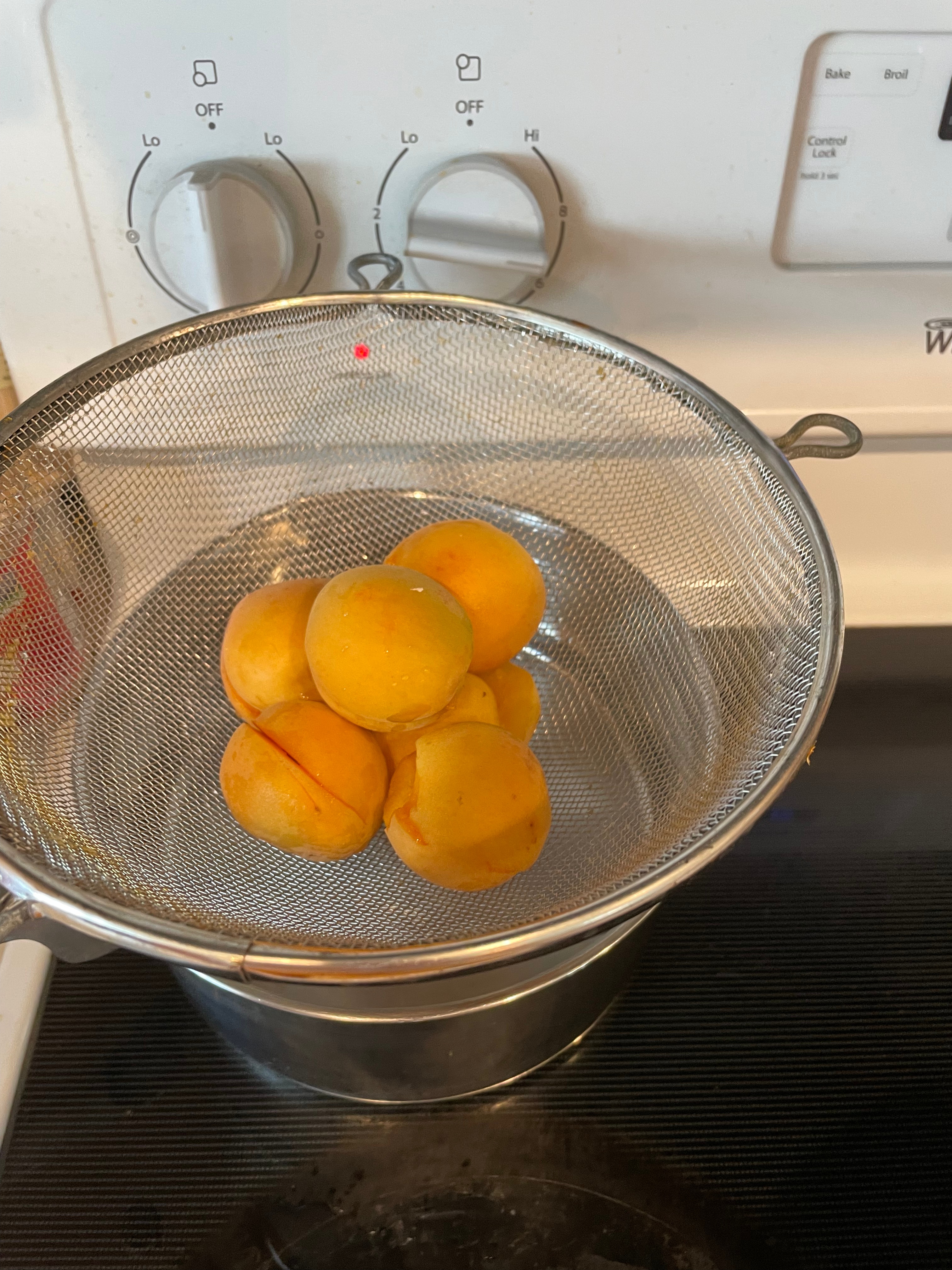
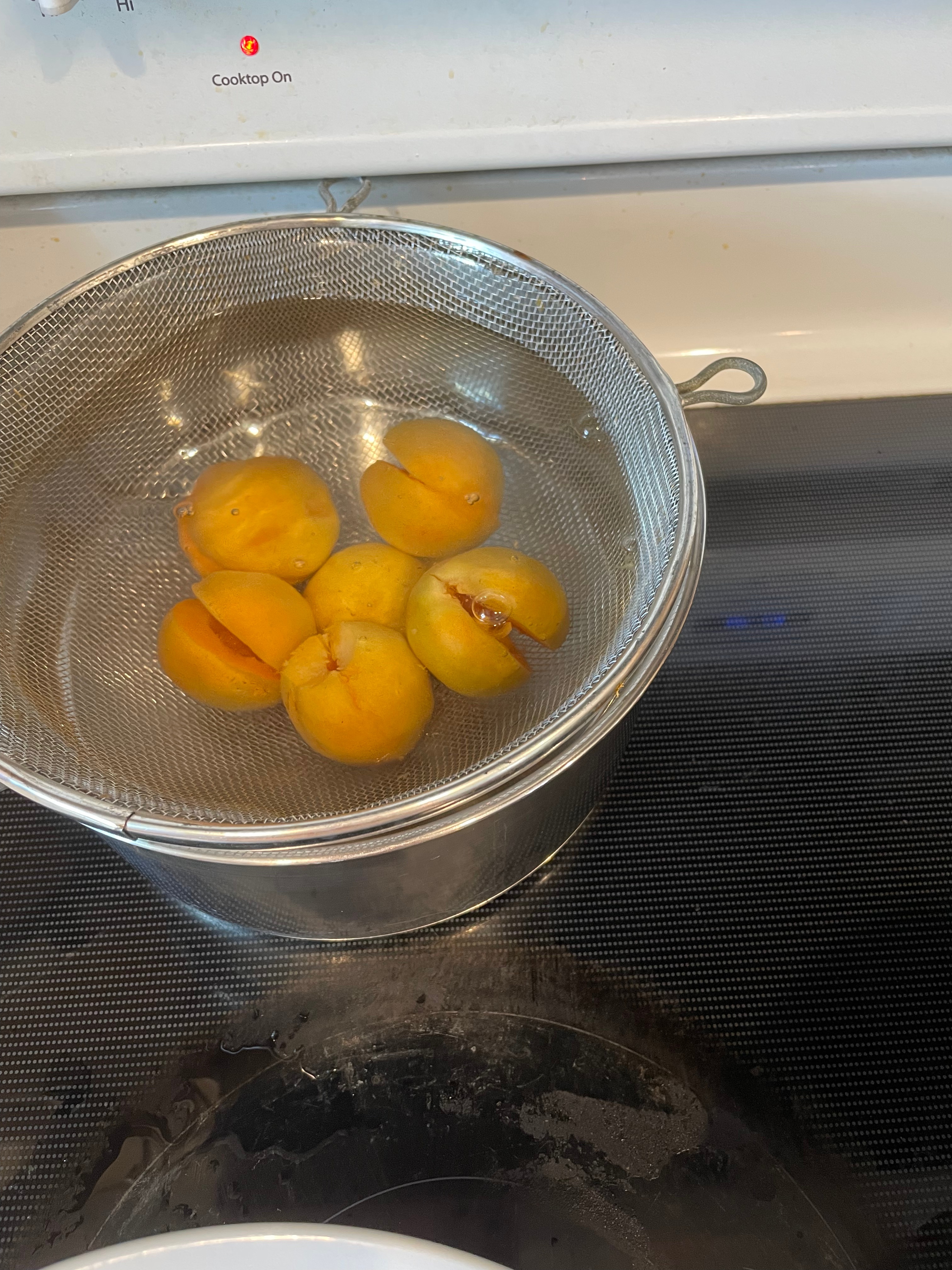
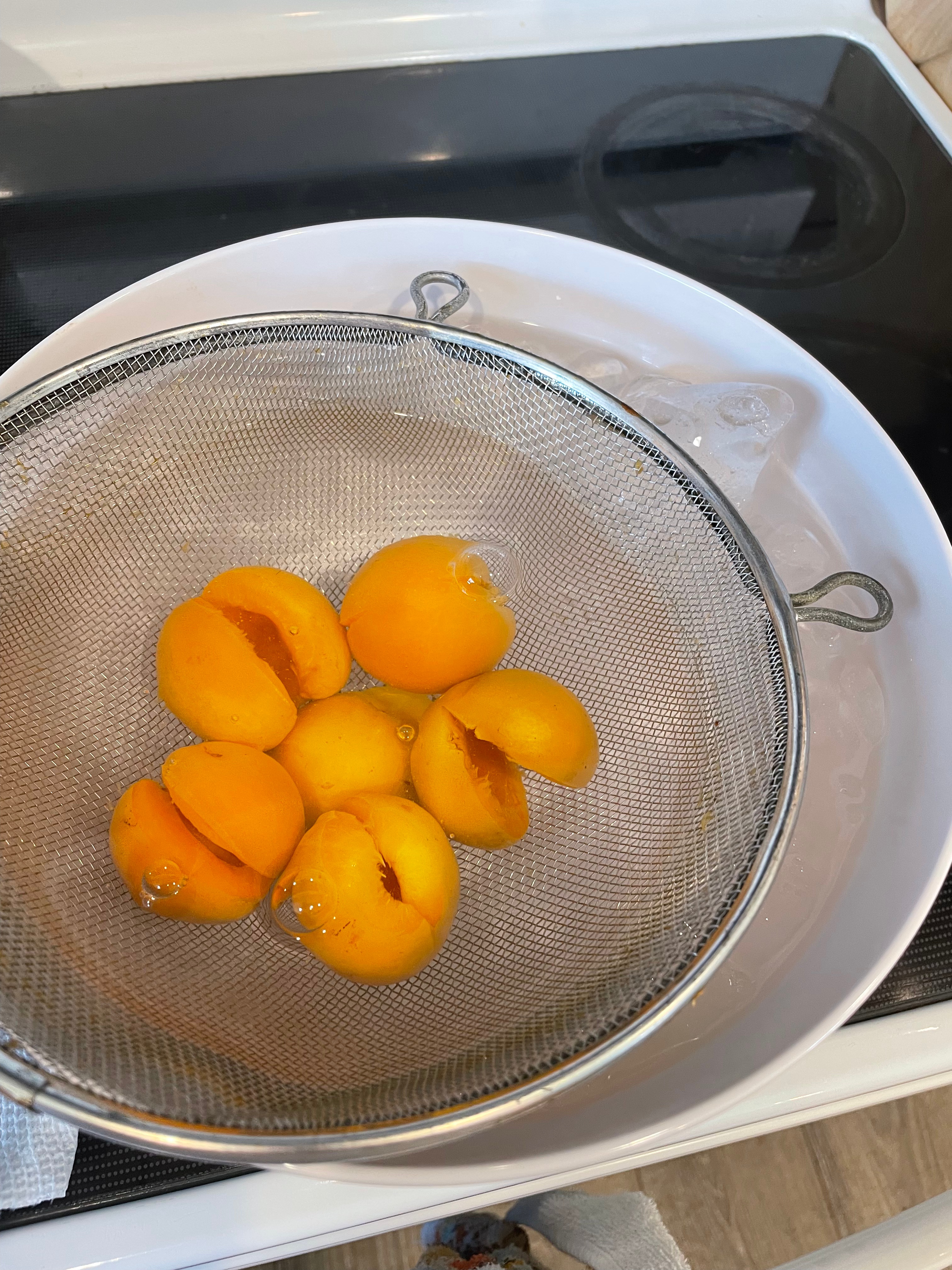
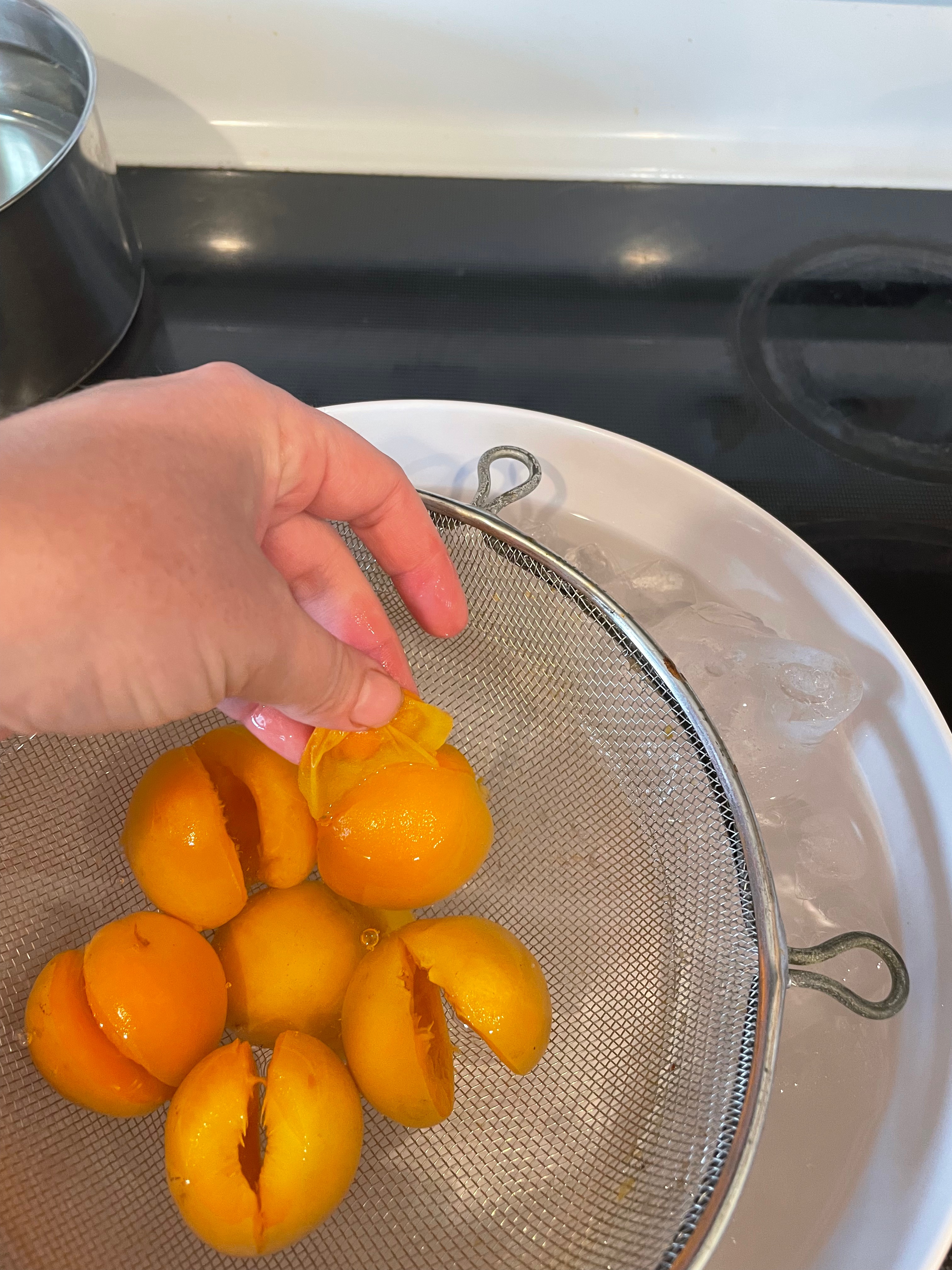
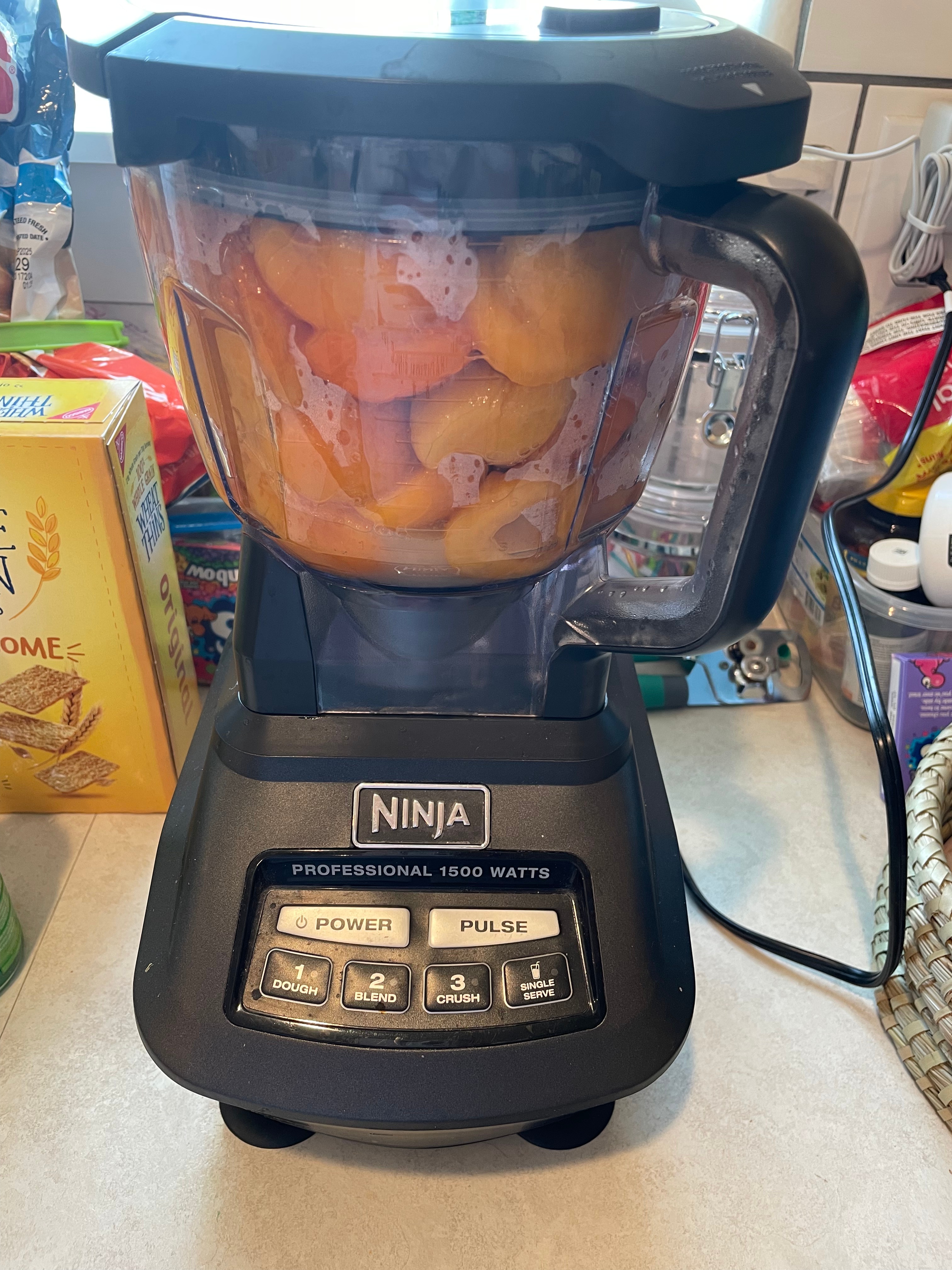
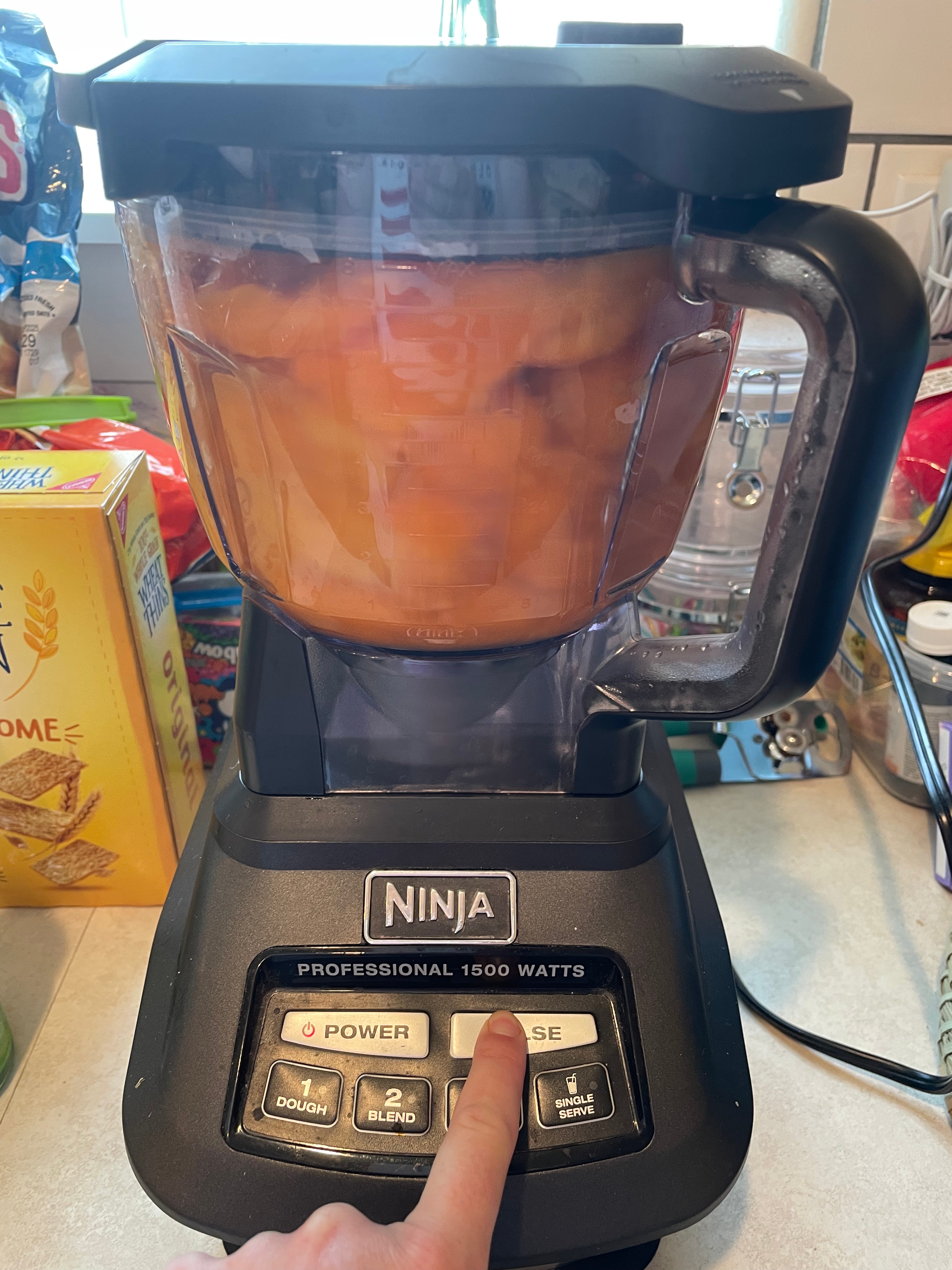
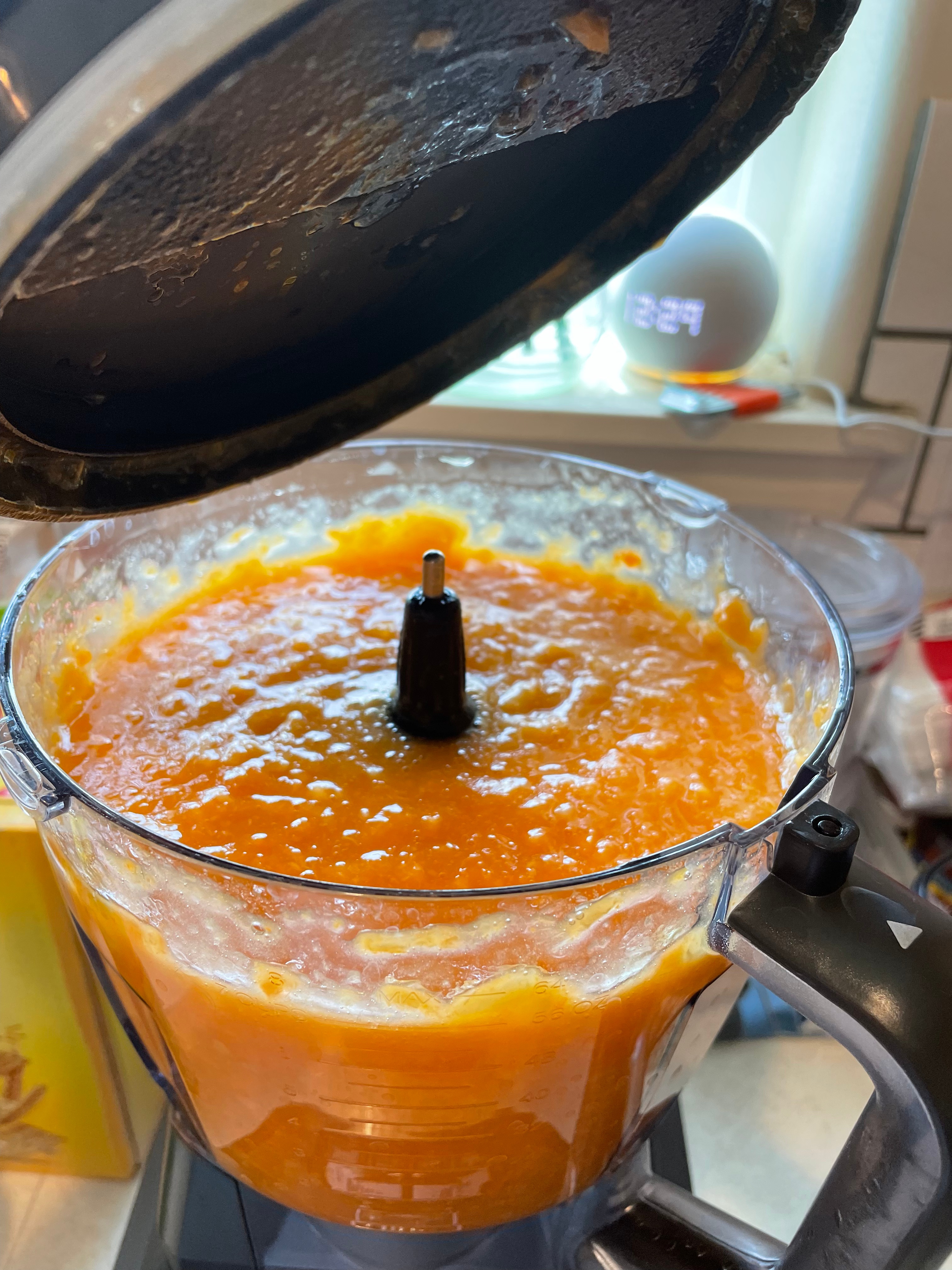
As soon as the water on the stove boils, I add a few apricots to the metal strainer, dip the strainer and apricots into the boiling water for 30-45 seconds, lift it out and place it into the ice water. The skins should just slide off, and as they do, I add them to the food processer. One full colander fills the food processer to the 64 oz mark.


I then run the food processer, add the recommended amount of lemon juice (1tbsp/4c. apricot puree for jam without pectin), blitz it once more to spread the lemon juice through, move the puree to a container and refrigerate the puree until I have finished pitting and peeling all of the apricots for the day.

Then, I wash up the dishes and switch to the actual canning process for apricot jam and apricot butter, which I will share in the next couple of posts. Happy prepping!
All fruit used in these recipes are locally sourced (about 5 blocks from my house) or commercially grown. Fresh homegrown fruit should NEVER be transported from a quarantine area into or through a pest-free area as this can introduce destructive pests to local orchards, decimating crops and people’s livelihoods.

 Krista Cooks
Leave a comment